Friday, August 31, 2012

Monthly Moonshine: Red Passion

As it turns out, I'm a bit old fashioned when it comes to my taste in alcohol. I should have realized this when I started drinking gin in university and several people asked if I was secretly an eighty-year-old man. This was usually followed by a remark about drinking pine trees (which, okay, fair, juniper has a distinctly pine-y scent to it). On the plus side, no one ever wanted to drink my alcohol at a party.

The next time I should have realized it was my discovery of the sidecar, the classic cocktail invented c. 1920. But no. I didn't even realize it when I fell hard for Pimm's on a hot summer day. It took a taste of Campari for me to really see it.

I was out with some members of my food writing class at Acadia restaurant in Toronto. We were there for the cocktails because the bar tender there is superb and very knowledgeable in what seem to be the forgotten arts of the cocktail (bitters, flavour complexity, syrups, etc.). I had a drink whose name I can't recall but whose flavour was strong with Camapri. I didn't know what the flavour was at first. Just that it had a sharp bitterness and a bit of spiciness smoothed out by subtle, underlying sweetness. 

I fell in love with Campari then and there. I also realized that Campari is a bit of an older drink: a lot of friends didn't even know what it was, and if they did it was only due to one the iconic vintage posters such as this one.


Campari has a distinct, vibrant red colour and is a staple in such classic cocktails as the Negroni and the Americano. It falls into the category of bitters, like angostura bitters, but unlike angostura bitters, which are used only in dashes, Campari is a potable bitter. Most people just call it an aperatif. 

Campari was invented in 1860 in Novara, Italy by Gaspare Campari and is made of an infusion of herbs, aromatic plants, fruit, alcohol and water. The recipe, like that of Pimm's and so many other herbal-based liqueurs, is top secret and apparently only known by very few people. 

I'll be honest, if you don't like bitter, you probably won't like Campari. I have an affinity for all things herbal and floral (lavender and rose are a couple of my favourite flavours), so I don't mind that it has a flavour some might liken to that of perfume. It's almost astringent in its bitterness, like biting into orange peel or the lingering tang of over-steeped black tea. It's just about my favourite thing right now.

This love of bitterness may also be why I prefer more classic cocktails. Older recipes tend to include a bitter element, whether in the form of cocktail bitters, like angostura; potable bitters, like Campari; or bitter alcohol, like gin. Today's cocktails slide much closer to the cloyingly sweet and syrupy, the headache-in-a-glass variety.

But that's okay. Now I not only have gin and Pimm's, but Campari. Cheers.

Tuesday, August 28, 2012

Don't Panic

So over the weekend I made 4 1/2 dozen cupcakes for a bridal shower. 1 1/2 dozen each of vanilla, lemon, and red velvet. I was so proud of myself for being hyper-organized. Normally I'm such a mess with these things and leave everything to the last minute and I'd wanted to avoid that this time. 

I had all my dry ingredients pre-measured in ziploc bags (labelled according to recipe) the day before I was baking them so I wouldn't have to contend with a mess of flour. I made the icing a couple days ahead and put it in the fridge so that it was ready to go for decorating. 

The cupcakes came out beautifully: all of equal shape and size (honestly ice cream scoops are the greatest way to fill cupcakes pans). And then I put the icing in my mixer to smooth it out and restore it to a spreadable consistency. 

It's possible I should have let it come up to room temperature a bit more before throwing it on the mixer because the unthinkable happened. It broke. It broke and I found myself staring at a curdled soupy mess in my mixing bowl.

My first reaction was full blown panic. My second was an impulse to sit on the floor and cry. Because I had exactly and hour and a half to decorate the cupcakes before they were being picked up. (In my defense, this had more to do with my desire to maintain the integrity of the icing in my too-warm apartment than with my leaving things to the last minute.)

So I'm here to tell you how to save your buttercream if it breaks on you.

1. Set a pot of water on the stove to use as a double boiler. Put the broken buttercream in a metal bowl and set it on top of the simmering water. Keep some unbroken buttercream that you haven't tried re-whipping yet to add after.

2. Heat slowly, stirring constantly. Don't leave it over the water for more than a minute at a time. You'll be pulling it off and putting it back on repeatedly, but you don't want the butter to melt completely or it will never come back.

3. Once you have something that resembles creamy soup with minimal lumps, throw it back on the mixer with a whisk attachment (or use a hand mixer) and whip it on high. Just whip the hell out of it.

4. At first it will do nothing. DON'T PANIC! (or, you know, panic a little, but don't lose faith) Eventually it will start to come together and form peaks as it thickens. It's going to be looser than when you first made the icing. 

5. Take some of the still-together, just-out-of-the-fridge buttercream you haven't tried to smooth out yet and add it slowly to your mixer. It should work in smoothly without breaking. Just don't add too much at once and make sure all the lumps are gone after each addition before adding more. 

Voila! Ready-to-use, good-as-new buttercream! Aren't you glad you didn't panic?

Thursday, August 16, 2012

The Tragedy of the Fallen Ice Cream

Oh dear. It's the middle of August already. Apologies. Time seems to be getting away from me this month. It's been busy and shows no sign of letting up. 

In any case I decided to treat myself to an ice cream cone today. Unfortunately, as I was walking the rest of the way home, the scoop toppled from the cone mid-lick and landed on the sidewalk. I stared at it for a moment, had a bit of a resigned chuckle with a man standing in his driveway who saw the whole thing, and then continued on my way. It's just been that kind of day.


Up until the Tragedy of The Fallen Ice Cream (to which the incident will now be referred), I was enjoying it immensely. I have the good fortune of living down the street from Xococava (Cava's confectionery counterpart), which not only boasts some of the best chocolate in the city, but also serves a mean scoop of homemade ice cream.

Today's treat was peach and sour cream, smooth and tangy with bits of real peach scattered throughout. It was perfect for a hot day, especially during a month that so readily calls to mind the fresh flavour of peaches. 

Now I'm lamenting that fallen scoop all over again.

Anyway, I've been wanting to talk about Xococava's ice cream for a while now and, tragic mishaps aside, this seemed like a good opportunity. 

They have a substantial variety of both ice cream and sorbet that changes on a seasonal basis. The flavours are written on a chalk board behind the counter on the far right. If you have trouble choosing (and I almost guarantee you will), you can ask to sample some. And you'll likely want to make sure you're going to enjoy it at $4.20 for a small cone. So it's a little on the pricier side, but I promise it's worth it. And as you can see from the above picture, small is still pretty sizeable.

If peaches aren't your thing I'd also recommend the hazelnut caramel. It tastes like a higher quality Fererro Rocher smoothed into ice cream. My god it's good. There's also a chocolate Guinness cashew ice cream that has a lot going for it. If you're hanging around midtown on a hot day (or even a cold one), it's definitely worth a stop.

1560 Yonge St (corner of Yonge and Heath, just north of St. Clair)
(416)-979-9916
Mon to Sat 10 am to 10 pm
Sun 10 am to 9 pm

Saturday, July 28, 2012

Chocolate for lunch (and maybe breakfast too)

-->
When I was a kid, one of my favourite sandwiches involved peanut butter and chocolate sprinkles. Yes. Chocolate sprinkles. But not the cheap candy ones you can get anywhere. I grew up with Dutch chocolate hagelslag, which have a richer chocolate flavour and are required to contain at least 35% cocoa to bear the name. Like just about everything in your life when you’re a kid, this seemed completely normal. I’d eat them on sandwiches, on toast, or on Dutch beschuit rusks (twice-baked, crunchy bread).  It wasn’t until I brought one of these sandwiches to school and was met by confused stares that I realized it wasn’t the norm for most people.

This is probably a good time to mention that I’m not even Dutch, a fact that only added to my classmates’ confusion. My grandfather worked for the Canadian government and as a result my mom’s family lived all over the world. The Netherlands happened to be one of those places and for one reason or another, those traditions stuck more than others. We snack on hagelslag and stroopwafels (thin waffle cookies pressed together with a syrupy center), receive chocolate letters in our stockings at Christmas, sing ‘Happy Birthday’ in Dutch, and those with underdeveloped taste buds devour double salt—dubbel zout—licorice. (I am not one of them. Imagine a black licorice jujube, but throw in a teaspoon of salt. Disgusting.) 

But back to the chocolate sprinkle sandwiches. In the Netherlands people eat hagelslag on bread for breakfast the way other people eat toast with jam. The website for De Ruijter, makers of fine hagelslag since 1860, will tell you that the average Dutch person consumes about 1 kilogram of chocolate hagelslag per year, that it’s the most popular condiment in the country, and that said country will eat more than 600 million chocolate hagelslag sandwiches a year. I would fit right in.

It seems to have developed out of nowhere, and for a country whose food culture was born of fishing and farming, it’s a bit of an anomaly. With meals heavy on pea soup, meat, potatoes, and the occasional cheese, the chocolate sprinkles look wildly out of place.

Yet with that in mind, another kind of sprinkle made of anise seeds coated in sugar (muisjes) appeared in Dutch tradition as early as the 17th century. Anise was believed to promote lactation, so muisjes were eaten to celebrate the birth of a child, and coloured pink and blue accordingly. Muisjes translates to mice and the name comes from the anise stem that sticks out of the tiny sugar ball like a tail. And, yes, they were eaten just as their chocolate counterparts—on a slice of bread or a beschuit. Who needs cigars when you have sprinkles on toast?

Whatever the origin, they still make a fantastic sandwich. I’ve eaten my fair share of muisjes as well, but the chocolate remains my favourite. There’s something that feels a bit naughty about eating chocolate sprinkles as part of a meal that isn’t dessert, something satisfying and playful. And maybe that’s the key to their origin. In a country with such practical staple foods, people wanted something a bit more fun.
-->


Tuesday, July 24, 2012

An old standby

Today I'm going to tell you about couscous. It's easily one of my favourite things to eat. It's versatile, delicious, and--you guessed it--real easy. One of the greatest things about couscous, assuming you're using the instant variety typically found at your local grocery store, is it can be ready in less than ten minutes. 

Instant couscous is pre-steamed and dried and only requires boiling water. You pour 2/3 cup of couscous into every 1 cup of water, stir, cover, remove from heat, and let stand for five minutes. Voila! Couscous. Ready to eat once you fluff it with a fork.

Now couscous by itself, boiled in plain water, can be rather bland, but this is where its versatility comes in. You can cook it in vegetable stock, chicken stock, beef stock (any stock really), orange juice, and the list goes on. I think you could probably cook it in any potable liquid. It will take on the flavours it's cooked in.

Made of semolina, couscous is an important food in Algeria, Morocco, Tunisia, and Libya, where it is steamed, rather than boiled like the instant variety. In this case the vegetables and meat are cooked as a stew while the couscous sits in a steamer above it, absorbing the flavours. The pairing with meat and vegetables is common in the above countries, though in Egypt it is often served as dessert with sugar, cinnamon, raisins, nuts, and cream. It also makes a great salad.

Like I said: versatile.

Unfortunately I don't have any pictures for you today. The salad I made was eaten so quickly that by the time I remembered to take one, it was gone. This salad is perfect in the summer when it's too hot to really cook anything, and you're looking for something light. It's made with oranges which serves to add a tangy, refreshing quality to it.

I wish I had a more clear-cut recipe for you, but it's one of those things that I kind of just throw together with whatever I happen to have lying around. So I'll give you my best estimates, but just know that you should adjust them however you see fit. The dressing is more accurate.

Orange Couscous Salad

2/3 cup couscous, uncooked
1 cup chicken stock

1 can mandarin oranges or 1 fresh orange
1 or 2 large carrots, grated
1/2 cup slivered almonds
2/3 cup dried raisins or cranberries

Dressing

1 tbsp balsamic vinegar
1 tbsp orange juice
1 tbsp olive or vegetable oil
1 tbsp water
1/2 tbsp sugar
1/2 tbsp minced gingerroot
1/8 tsp ground cumin
salt and pepper to taste

Cook couscous according to directions on the box. If the ratios are different than what I listed above, use those ones.

Toss cooked couscous with oranges, grated carrots, almonds, and cranberries.

Whisk together all ingredients for dressing and add to salad. The recipe may provide more dressing than you need, so add a little at a time to ensure you don't drown your salad. It should coat it and add flavour, not turn it into soup. 

And that's it. Easier than pie. Change up any of the elements as you will. Try pine nuts or currants. Oftentimes I'm missing one of the ingredients above so I just make it without. It'll taste good anyway.

As for other recipes, there are plenty of them out there, so take a look around. It's great in place of rice or pasta with a meal. As for me I think I'd like to check out that Egyptian dessert couscous. I'll let you know if I find something worth sharing.

Monday, July 16, 2012

Cilantro Manifesto

There are few ingredients that receive hatred as vehement as that directed at cilantro. While many love it, there are those who would rejoice in its mass global extinction, would revel in watching it shrivel and burn to ashes. There’s even a blog dedicated to the loathing of cilantro (ihatecilantro.wordpress.com). And that is the real difference between hatred of cilantro and hatred of other oft-abhorred foods. People dislike Brussels sprouts, anchovies, and liver, but never as vocally and passionately as those who hate cilantro. And then on the opposite end of the spectrum, there are those who love it. Very few people fall into the indifferent middle ground.

Cilantro has several aliases, one of them being Chinese parsley, and another being coriander, though the latter tends to refer to the milder seeds, which aren’t subject to the same level of aversion. This Mediterranean native is common in South American, Middle Eastern, Indian, and Chinese cooking, and considered one of the most global herbs. It is found in a number of chutneys, curries, salads, and the ever-popular guacamole, bringing with it a distinct and citrusy flavour.

So why then, do people hate it so much? Why can you find negative comments on this herb as far back as 1600, lingering in the pages of English garden books and French farming books? What exactly inspired Julia Child’s desire to, as she put it, “throw it on the floor”?

One common complaint is that cilantro smells and tastes like soap. Or stinkbugs, depending on how disparaging the critical person wants to be. In fact, some of the aldehydes (organic compounds) that make up cilantro’s fragrance are the same as those found in soap and the odour given off by some bugs. Scent, apparently, has a lot to do with it, more than the actual flavour. And it may not be that cilantro-haters simply dislike the smell; it may be that they can’t smell certain aromas, so whatever makes people love it is simply not present to those who hate it. Some studies even suggest that people may be genetically predisposed to finding it repulsive. So despising cilantro could be as much a fluke as whether or not you can roll your tongue.

Personally, I love cilantro. I love its distinct, sharp flavour, the way it announces its presence in a dish and contributes to a complexity that more than justifies its inclusion. I know plenty of people who would disagree. Vehemently. This weird food divide isn't likely to change anytime soon, but at least there's some explanation as to why.

Check out this article that was in the New York Times if you want to read more.

Tuesday, July 10, 2012

Simple yet satisfying

As someone who loves food, I actually do a pretty terrible job of feeding myself sometimes. Cooking for one can be difficult, especially if you don't want to be eating the same meal four days in a row in the form of leftovers. More often than not I find myself eating pasta with butter and parmesan cheese with an apple on the side or soft boiled eggs with toast. Not that I don't enjoy eating those things, it's just not very exciting. 

So every once in a while, when I find myself with a bunch of asparagus or some nice summer tomatoes, I endeavor to make myself something a little more interesting. That something will inevitably still be fast and easy and conducive to a single serving, but there will be a few more flavours at work.

A few days ago I roasted some asparagus. It's my favourite way to eat it. If you're careful not to leave it in the oven too long it retains a lot of its satisfying crunch. And I love when the heads of the spears get a bit crispy. Plus it's so, so easy. Drizzle with some olive oil, a bit of balsamic vinegar, some lemon juice if you feel like it, sprinkle with salt and pepper, even throw in a bit of sliced garlic if you happen to have some lying around. Put it in the oven at 350F and roast for about 5 or 10 minutes depending on your oven and depending on how cooked you like your asparagus.


I cut it into smaller pieces and threw it over spaghetti (which you don't need to butter due to the oil from the asparagus). What really made it though was the sauce I topped it off with. It was a tangy mustard concoction that brightened the whole thing, lifting it out of its rather mundane status of pasta with vegetables and turning it into something that actually felt like a proper meal.

To make the sauce, combine 3 tbsp of Dijon mustard, 1/4 cup of honey, 3 tbsp of lemon juice, and 1 tbsp of olive oil. Whisk it together and voila! Sauce for your asparagus. It could be used just over the asparagus as a side dish, but it works really well as a pasta sauce if used sparingly. And it keeps well in the fridge for several days.

So next time you're in a bind trying to make yourself a meal that is quick and delicious, simple yet satisfying, look no further than roasted asparagus with mustard sauce. You're going to love it. 

Friday, July 6, 2012

The love of food

Gluttony is an ugly word. It even sounds heavy; clunky and stunted on the tongue. And, sloth aside, it's cousins--wrath, lust, avarice, envy, and pride--are decidedly more glamorous. They offer far more romantic options to aid in a tumbling from grace.

And yet. Is there much that is more pleasurable than a truly delicious meal? The kind that has you savouring every bite as long as possible, holding it in your mouth to make the flavour last. The kind that compels you to shut your eyes and groan. The kind that has you scraping up every last morsel long after you're sated. 

Well. It would seem that gluttony and lust have a tag team on human pleasure. We've even gone so far as to label particularly spectacular pictures of food as "food porn". We, as a species, love food.

Somehow, though, maybe because of gluttony's position as a deadly sin, maybe because the word "pleasure" is so often paired with the word "guilty", we've come to feel, well, guilt-ridden when we eat good food. We've bought into the false notion that healthy food can't be delicious food, that if we're enjoying it there must be something inherently wrong about it.

To be fair, I think that is well on it's way to changing. We're becoming more knowledgeable about what we eat and what makes it taste good. We no longer rely solely on salt as a flavour additive, we're developing a sound wariness of excess sugar, and I know an impressive number of people who fall to pieces over their love of certain vegetables. So we're getting there. 

And let's be honest, we're never going to stop loving food. This is a good thing. If we love food we're more open to trying new things, more willing to search out the next spectacular flavour, more excited when we find that dish that is both mouthwatering and genuinely healthful. 

Speaking of excited, while perusing Orangette today (the blog that inspired me to start this one), I stumbled across Sprouted Kitchen. This food blog is dedicated to better tasting wholesome food. And oh is it gorgeous. The photography is nothing short of stunning, making me lament my lack of a better camera. Canon PowerShot, you're not cutting it. 

Sometimes that many photographs is a mark of inferior content, but in this case it isn't. Sara Forte writes with a casual elegance that is at once entertaining and accessible. The recipe instructions are clear and she offers them up as one method of doing things rather than as hard and fast rules. 

Since I only just discovered this wonderful source of whole food recipes, I haven't had a chance to try any of them yet. These lemon pancakes might be where I dive in. They look incredible, and they're gluten-free. Even though I can eat gluten 'til the cows come home without adverse effects, I know a few people that can't, so I'm always excited when I come across a gluten-free recipe that looks promising. 

My point here, if there is one, is don't feel bad about eating. Food should be enjoyable, pleasure without it's guilty associate. And if you want to treat yourself to a slice of chocolate cake or a box of donuts, find someone to share it with. Spread the love and cut the calories in half. And maybe don't eat the entire box in one sitting.


Friday, June 29, 2012

Monthly Moonshine: It's Pimm's O'Clock!

The first time I had Pimm's I was, appropriately, in London. I was there with my family and we'd just had a whirlwind of a day that involved Hyde Park, the Tower of London, and Buckingham Palace. We were tired, we were hungry, we were hot, and we were desperately in need of a drink. After some squabbling we ended up at a little pub where we ordered fish and chips. 

Normally I'm the type to order beer, especially at a pub in London, but neither my mom nor my sister drank beer at the time so they asked the waiter what else he might recommend. He suggested Pimm's No.1 Cup. He was then met with looks of mild confusion.

Until this point I had gone through life tragically unaware that Pimm's existed. He went on to explain that it was a mild summer drink, typically British and kind of like punch, made with a gin-based liqueur, lemonade and various fruits. We figured "When in London..." and gave it a try. And we were truly not disappointed.


Pimm's was created in London in the 1840s by James Pimm. He owned an oyster bar in the city and developed the drink as a more palatable form of gin, which could be sipped rather than knocked back like a shot. The gin is sweetened and flavoured with liqueurs and fruit extracts, giving it its dark amber colour. The recipe is closely guarded and allegedly only known to six people. At least that's what they claim on the back of the bottle. 

It is truly the perfect summer drink, especially if you don't like beer and you're not partial to the overly sweet Mike's Hard style of coolers. Pimm's Original, the recipe featured on the homepage of their website, is made up of three parts lemonade, one part Pimm's No.1 Cup, strawberries, cucumber, orange, and mint. Mix it all together, pour it over ice, and there you have it. It's commonly served in a jug, making it perfect for backyard barbecues and summer parties.

There is a subtle bitterness underlying its sweetness and the mint acts as a natural coolant that cuts through the medley of flavours to leave you with a fresh, almost earthy taste. The more you let it sit, the more the flavours mingle together lending a complexity that no run-of-the-mill punch could accomplish. 

Traditionally, Pimm's is made with English-style lemonade, which is clear and carbonated, but it's not uncommon for people to substitute ginger ale. The herb borage was often used instead of mint in the drink's earliest incarnation, as it has similar cooling properties and a cucumber-like flavour. However, due to the fact that mint is a more common herb it has come to replace it as standard.  

For me, Pimm's is summer in a glass. It tastes like slipping into the cool water of a pool on the hottest day of the year. It evokes lazy summer afternoons basking outside as the heat of the sun hangs around you, your glass dripping a ring of condensation on the table, with the lingering scent of summer flowers and freshly cut grass heavy in the air. And it's promising to be a long beautiful summer, so grab a bottle and sink in.


Monday, June 25, 2012

Simple Salads

Once upon a time I hated broccoli. Emphatically. I used to wonder what ever possessed anyone to eat it in the first place, let alone have them coming back for more. I don't hate broccoli anymore, though I couldn't tell you what changed my mind, couldn't tell you the precise moment of epiphany that lead to my current, ardent love for broccoli.

I can tell you how to make the broccoli salad that I made yesterday. Lucky for me, and for you if you make it, broccoli salad is stupidly easy. 

You will need the following:
- broccoli, broken into bite-sized pieces
- bacon, cooked and crispy, also broken into bite-sized pieces
- sesame seeds

For the dressing:
1 cup of mayonnaise
1/4 cup sugar
1 tbsp vinegar

Toss the broccoli with the bacon bits and sesame seeds. I used a bunch of broccoli the size of the bundles you can buy at the grocery store. I am going to guess that I used about 2 tbsp of sesame seeds. What I actually did was sprinkle sesame seeds on the broccoli until I thought there was enough. I recommend you do the same.

As for the dressing, mix it all together and toss it into the salad. Use just enough to coat everything. The above recipe was more than I needed, so be careful not to drown your salad in a sea of mayonnaise. 

I should probably tell you that the measurements given in the above recipe are very rough. By which I mean I didn't actually measure when I made my dressing, much like the sesame seeds. Why? you ask. Well. I'm lazy. One of these days you'll wander over to this blog and find I've renamed it. Lazy Girl in the Kitchen maybe, Adventures in cutting culinary corners. It's even alliterative. 

But that's off topic. The point is this salad is so easy and so delicious and you should go make it right now. Throw in some dried cranberries or toasted slivered almonds if you feel like it. What are you waiting for?


Sunday, June 17, 2012

And red all over

This is a post about strawberries. Specifically, Ontario strawberries. Because it's that time of year again, when the strawberries are fresh and out to ruin you for all other strawberries. 


I adore summer strawberries. The ones that are a little bit on the smaller side, soft and ripe and dripping with juice. Red all the way through. After a winter of strawberries that crunch and leave you with a white, tasteless interior, these ones are nothing short of divine.

Their sweetness is fuller, lingering on your tongue with tangy under-notes, begging you to eat just one more. I like them best when they're on the cusp of being overripe. Maybe there's a small bruise on one side, marred so that other people pass it over for a prettier one. But that's when they're at their best, their sweetest, their most flavourful. And you can taste an earthiness underneath it all, something of the soil they were grown in, something of the spring rains that coaxed them into being.

This is the way strawberries were always supposed to taste. Of early summer's gentle warmth and sun-drenched days that never seem to end.

Tuesday, June 12, 2012

Malted Milk


Lately I've been drinking malted milk. I have terrible insomnia most nights and more often than not I wake up during the night, about once every hour, usually with my sheets twisted around my legs like I've been wrestling with my entire bed. So my mom suggested drinking warm milk. I wasn't overly fond of the idea, so one night when she came to visit she brought a container of Horlicks malted milk powder. I figured it couldn't hurt to try.

I think I've had it before bed for five nights now, but I'm not sure if I'm sleeping because of the milk, or because I've been inordinately tired lately (which is the only other way I seem able to get a full night's rest). For now I'm going to go ahead and give credit to the milk.

I'm not going to lie--I was skeptical. Not only about its ability to aid in sleep, but about the taste. As much as malt brings to mind Maltesers and malted milk shakes, it didn't sound very good as a hot beverage. I was pleasantly surprised.

If I had to compare it to anything I would have to say it reminds me of the milk leftover after eating a bowl of Shreddies, but warmed up. That probably sounds terribly unappealing, but I swear it's actually delicious. There's something oddly comforting about it, something that tastes like home and childhood and winter evenings spent reading a book or watching a movie. And maybe that is exactly where the appeal lies, less with its oddly post-cereal flavour and more with the nostalgia attached to it.


Regardless, I've been enjoying it, so I'm going to keep drinking it. Whether it's the effects of the hot milk that are helping me sleep or just a psychological calming effect that comes from feeling at home, it seems to be working.

And it's easy enough to make, just mix the powder with a bit of water to make a paste and add hot milk (detailed instructions are on the container). I usually heat up my milk on the stove top. If you read my post about chai tea, then you already know that I have a tendency to boil milk over. For the love of God! Watch your milk while it's heating! It makes such an awful mess if you don't. Trust me. I've done it enough times to know. 

And in case you were wondering, yes, that mug reads 'I solemnly swear that I am up to no good' scrawled over the Marauder's Map. I got it at the Science Center when they had their Harry Potter exhibit. The map only appears when the mug is hot. It might be my favourite thing ever. 

Stay tuned for an upcoming post where I will wax poetic about Ontario strawberries. Until then, malted milk--Hogwarts style.

Wednesday, June 6, 2012

I scream, you scream

The other day while I was perusing Pinterest (as one is wont to do when there are countless other things that need to be done), I came across a recipe for single ingredient banana "ice cream". It is literally made with pureed frozen bananas and nothing else. Well, okay, with peanut butter and cocoa powder as well, if you choose to amp it up a bit, but you don't need to add those.

'What is this?' I thought. 'Ice cream made with just bananas? Guilt-free ice cream???' 

Oh yeah. 

And since it's just about the easiest thing in the world to make (does it even merit the word 'recipe'?) I tried it as soon as possible. And you know what? It's delicious! Definitely comparable to ice cream. The texture is a bit more gooey, for lack of a better word, but not in an off-putting way, and I'm nearly positive a kid wouldn't know the difference.

Let your bananas get just a bit spotty, but not so ripe that they're brown. Chop them (I used four here) and then freeze for about a couple hours. Do chop them; trying to puree a whole frozen banana will not be fun.


Now, if your blender is anything like mine (ie. the worst appliance known to mankind) I would suggest using a food processor. Actually, I suggest using a food processor anyway, I just don't have one. I'm going to have to rectify that soon so I can make endless batches of this without undue frustration. (Really, it's the worst.)

Once it's smooth and whipped up, and you've scraped the sides down ad infinitum, toss in some peanut butter and cocoa powder. Or you could just eat it as is. It's also good as plain banana, but I couldn't resist the temptation of chocolate and peanut butter. Plus, wouldn't you love to be getting potassium and protein out of your dessert?
 

Anyway, I just eye-balled the amount of peanut butter and cocoa powder, but if you follow the link at the beginning of the post, you'll get precise measurements.

It has something of a soft-serve consistency when it comes out of the blender. It's tasty just like that, and definitely easier to scoop, but four bananas worth of 'ice cream' is a bit much for one person, so you'll likely want to freeze the rest. Let it sit out a bit before scooping it because it's going to be pretty solid. Or if you're impatient, like me, just run your ice cream scoop under hot water.
 

I was actually really surprised by this. I assumed it would be good, but oh man, its similarity to ice cream is impressive. And you could eat this for breakfast, as part of your lunch, as a post-workout snack, because you're really just chowing down on some bananas. 

I still can't wrap my mind around it. This might take some time. And some different combinations: maybe add some strawberries; mangoes; coconut milk; orange juice; mix in some nuts or chocolate. This is definitely going to require an investment in a food processor.

Friday, June 1, 2012

Monthly Moonshine: Black Russian

I have to tell you...as I was contemplating cocktails to share with you I realized I had very little alcohol to mix anything complex. So that is a problem I will rectify by the time our next Monthly Moonshine rolls around. 

And then I decided that I need to get over my bias against vodka. That, and it turns out my sister and I have three separate kinds of vodka in our freezer and it's about time we used some of that.

So I bring you the Black Russian.

The Black Russian was invented in 1949 by Gustave Tops at a hotel bar in Brussels, Belgium for American ambassador Perle Mesta. It is so named for the use of vodka, a typically Russian spirit, and the dark hue of coffee liqueur. It seems strange, given the political climate at the time and the impending Cold War, that such a drink would be created for an American diplomat, but there you have it.   

Like every cocktail ever invented, opinions vary as to the correct ratios. However, in this case I found a clear trend toward 1 1/2 oz vodka and 3/4 oz coffee liqueur. So that's how I made mine. I would recommend using Russian vodka, for obvious reasons, but I found some Grey Goose so I used that. Kahlua is probably the most common choice for the coffee liqueur, but Tia Maria is also popular. 


In an old fashioned glass pour vodka over ice followed by the coffee liqueur. Stir and enjoy! Since this cocktail has no mixers to speak of it packs a bit of a punch. The coffee flavour hits you first, but it's quickly followed by a bite of vodka. 


My inner geek is certain that this is Black Widow's cocktail of choice. It appears unassuming, almost sweet on the surface, definitely nice to look at, but don't let your guard down because it will knock you off your feet. I'm sure her fellow Avengers would agree.


Monday, May 28, 2012

A lemon named curd

For Mother's Day I made a Pink Lemonade Cake from Better Homes and Gardens. Everyone loved it. I'm sure I've said it before, but I'll say it again--I don't really like cake. As cakes go, however, this one was pretty good. It had a sharp lemon flavour and a hearty dose of sweetness. I'll be honest though. Mostly I wanted to make it because it's just so pretty.


Look how lovely and pink it is. And the layers are subtly different shades. I fell in love as soon as I saw the picture of it here. Theirs is a little nicer looking than mine, but they have food stylists, and I do not. So there.

Anyway, I wanted to talk less about the cake and more about the lemon curd I used in the middle. As per usual I deviated from the original recipe when it came to icing and filling. I used my Italian buttercream recipe from this post, adding a teaspoon of lemon extract along with the vanilla.

And for the middle layer I used Anna Olson's lemon curd recipe. I folded in a cup of whipped cream (holding stiff peaks) to turn it into a sort of impromptu mousse, but you could use it all on it's own. The curd comes from a recipe for warm lemon sponge, which I would highly recommend making in it's entirety. It's exactly how it sounds. And the curd provides a beautiful contrast of texture nestled in the middle of the individual cakes.

'Curd' is a very unfortunate word, I think. Probably because the mind immediately jumps to 'curdled' and there's not much that's more disgusting than curdled dairy. Please don't let this deter you. Think of it as lemon custard if you must. Because that is actually all it is. 

The Anna Olson recipe is my standby whenever I need lemon curd. As I'm sure you've already guessed, it's extraordinarily easy. And it's always worked out for me, which is more than I can say for just about every other recipe I've ever made. I think it's safe to say it's pretty fool proof. The trick is to whisk it the entire time so as to avoid any lumps. The butter will remain in chunks until it's heated up enough to melt, but don't worry, it will be fine.

When you chill it, just be sure you place a piece of saran wrap directly on the surface to prevent it from forming a skin. 

The lemon flavour you get out of this is divine, with just the right balance of tangy and sweet. It's bright and refreshing and so smooth and creamy. I don't even mind the bits of zest in it. That's a big deal. Just ask my mom.

So keep it in your recipe book. Use it to fill cakes, fruit tarts, cream puffs. Dip strawberries in it, spread it on toast. Or eat it right out of the bowl with a spoon. Just as long as you try it. However you might feel about the word 'curd'.

Tuesday, May 8, 2012

Monthly Moonshine: Belated Martini

So I missed April's Monthly Moonshine. Sadly, I'm sure no one's surprised. Oh well. I will try my best to have another one for you at the end of this month. On time, preferably. In any case, I recently fell prey to Pinterest, and all the recipes that I'll test will likely end up here if they prove worthy of sharing.

For now, I bring you the martini. 

The martini is one of those cocktails that everyone seems to know. Made famous by James Bond who preferred his shaken, it is steeped in history, romanticism, and a certain amount of swagger. Sadly, in recent times, it also seems to be made primarily with vodka. For those who enjoy vodka, I'm sure that's seen as rather an improvement, but I'm a gin girl, and I like mine better that way.

Now, you should know, there are more ways to make a martini than I can count. As I just established, the first major division is vodka or gin. Then of course dryness. 'Dry' refers to how much vermouth is used in making it. I like mine very dry, so the most I do is swirl the vermouth around the glass enough to coat it, and then dump it. Some prefer olives, and some prefer a twist of lemon. Sometimes I'll even have it dirty, which involves the addition of olive brine.

The internet is rife with different martini recipes, but I'm here to tell you how I make mine.

First, as I mentioned, swirl some vermouth around the glass to coat it and discard the excess. Then shake two ounces of gin (I prefer Bombay Sapphire) with ice in a cocktail shaker. Some people don't like shaking because they claim it 'bruises' the gin. I'm not sure what this means and I've never noticed any difference. That may be because of my unrefined palette, but if your palette can't detect minute differences, you probably won't notice this either. 

Also, I like using my cocktail shaker. It's fun. 

Strain your chilled gin into your glass and add a few olives. It's as easy as that. Of course it's best when it's cold, so you have to drink it fairly quickly. I wouldn't recommend a lot of them, and they aren't for everyone. If you prefer vodka, definitely use it instead. 

And if you ever want to order one at a bar, just ask for a gin martini, very dry, with olives.


Tuesday, April 24, 2012

A bit of zest

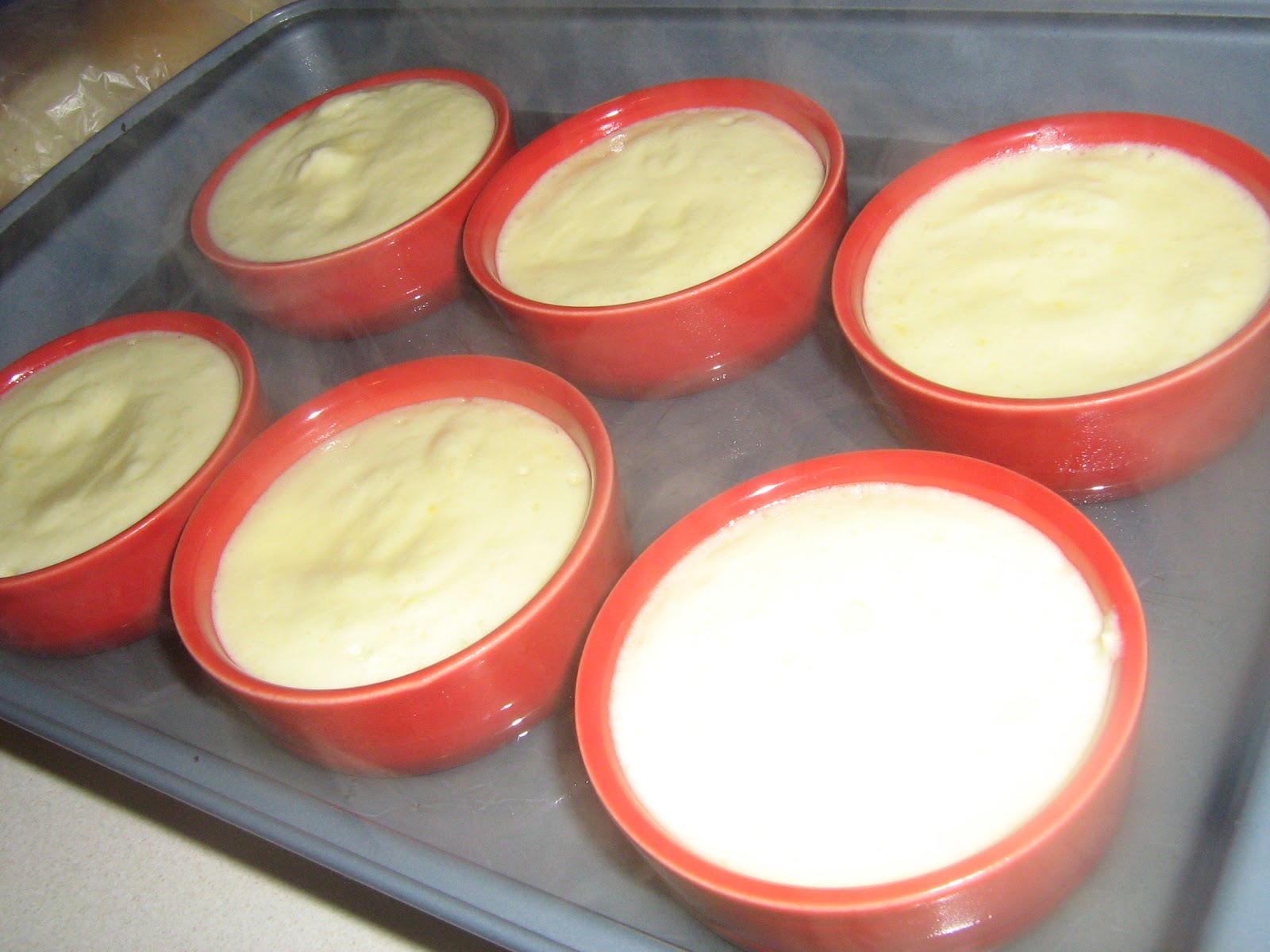
I made some rather wonderful lemon pudding cakes this weekend. As always, they're fairly easy to make, though I had a moment of panic when the batter remained stubbornly curdled until I folded in the egg whites. But they turned out beautifully, so all was well in the end. 

They stay cakey and almost souffle-like at the top while forming a sort of lemon curd at the bottom. It's delicious. Tangy without being overwhelming and refreshing after a full meal. That's the best thing about lemon desserts. There's always room for a bit more.
 

The recipe comes from Anna Olson, whose desserts never disappoint. So without further ado, here it is.

Lemon Pudding Cakes

6 tbsp unsalted butter
2/3 cup sugar
4 lemons, zest and juice
4 eggs, separated
1/2 cup flour
1/2 tsp baking powder
1/2 cup 2% milk

Beat butter and sugar. Add zest and lemon juice, then egg yolks, one at a time. As mentioned above, it will likely curdle. Don't panic! It'll be fine.
Add flour and baking powder, then milk, a little at a time, until you have a mostly smooth mixture.
Whip egg whites to stiff peaks and then fold into batter.
Pour batter into ramekins and place into a pan. Pour boiling water into pan so that it comes about halfway up the sides of the ramekins.
Bake for 35 minutes in a 350F oven.
They should be golden brown on the top when they're done.


They're going to fall a bit once they've sat out of the oven for a bit, but they'll still taste delicious. I crushed some raspberries with a bit of sugar to add extra colour and another layer of flavour. And raspberries pair so well with lemon that I couldn't resist.


Friday, April 13, 2012

Coffee, Vietnamese style

Whenever the weather starts to get warm, I always find myself in a bit of a conundrum with my morning coffee. Though the truly hot weather hasn't hit yet (and hopefully won't until June), there are still a few days where I don't want to be drinking a cup of hot coffee. There's nothing less desirable than sweating profusely over your breakfast because you need your caffeine fix.

This is why I'm here to tell you about Vietnamese coffee. Though you can drink it hot, it's meant to be served over ice. And it's so, so good. Sweetened with condensed milk and made as a single serving, it's perfect for a hot summer day. And you won't have to buy expensive iced drinks from Starbucks now.

First, you need some fairly specific equipment. I was lucky enough to receive all of mine for Christmas, but I'm told you can get it all in Chinatown. The Vietnamese filter has been disassembled in the picture below so you can see all it's parts. Then you need some Vietnamese coffee, such Trung Nguyen.


Fill the filter with coffee until it reaches the indented rim that runs along the inside of the filter. I use about 3 rounded teaspoons. Then screw on the removable part of the filter tightening enough that the water doesn't run through too quickly. It should be snug, but not so tight that you can't turn it any further. Pour some condensed milk into the bottom of a glass. Then boil some water (or, you know, have it boiling while you're getting the glass and coffee ready).


Place the filter over the glass with condensed milk. Pour about a centimeter of water into the filter and wait about 20 seconds. If the coffee is dripping through (not pouring through) then fill the filter to the top with water and place the lid on top. If you find that the coffee is not dripping through or is filtering through too quickly, loosen or tighten it accordingly.


Once all the water has filtered through, remove the filter. If you want to drink it hot, top it off with some more hot water. I like to stir it so the condensed milk is evenly distributed. Other people like to save it for the end. If you want it iced, stir it up and pour it into a glass over ice. Again, you don't have to stir it first, but I think it tastes better all mixed in. Not too sweet and kind of rich and chocolatey.
This is by no means the final word on Vietnamese coffee. In fact it was largely trial and error aided by the internet. But it really is very easy. The only problem is if you want another cup you have to go through the whole process again. But I think it's worth it. So happy warm weather! And if anyone has their own tips for Vietnamese coffee, let me know.

Tuesday, April 3, 2012

On the Uses of Buttermilk

I had some buttermilk left over from the Irish Soda bread I made a few weeks ago. One of the annoying things about buttermilk is that it only comes in one-litre containers, never anything smaller, so no matter what you're making, you always have some left. One of the good things about buttermilk is that it has a fairly impressive shelf life.

I was flipping through my cookbooks, trying to find a recipe that used buttermilk, and I came across some cornmeal muffins. Now, normally I'm not that fond of cornmeal muffins, or cornbread, or cornmeal in general unless it's added in small amounts for texture. I don't know why, it's just not my thing.

These muffins though, are delicious. I'm so glad I had buttermilk that needed using, because otherwise I might have eternally passed this recipe by.


The best part about them? They're so easy. You probably could have guessed that's what I liked best about them. Sometimes I think I should have called this blog The Lazy Baker. Anyway, the muffins. Aside from being truly easy to make, they also taste really good. They are ever so subtly sweet, just a hint, not quite there, and the lime juice and zest round out the flavour nicely. They end up smelling weirdly like lime Tostitos, but I swear that's not how they taste.

They're also really moist. Oh yeah, another good thing about buttermilk? It's the king of keeping baked goods moist. You'll never have to worry about drying out if you use buttermilk.


You probably want the recipe now, right?

Cornmeal Muffins from Anna Olson

1 1/3 cups buttermilk
1/3 cup vegetable oil
2 eggs
3 tbsp sugar
1 tbsp fresh lime juice
1 cup cornmeal
1 cup all purpose flour
2 tsp lemon zest
1 tsp baking soda
1 tsp salt


Whisk buttermilk, oil, eggs, sugar, and lime juice to combine.
In a separate bowl combine cornmeal, flour, zest, baking soda, and salt.
Add to buttermilk mixture and whisk until smooth (it's a very wet batter).
Pour into greased or lined muffin tin.
Bake 15 to 18 minutes in a 350F oven until golden brown and tops spring back when pressed lightly.


I can see these being extremely versatile. Brush them with a water icing glaze to sweeten them up a bit more, grate in some cheese before baking to make them savoury. Bake it in a pan as cornbread. You can stir in blueberries before baking to add another layer of flavour. Raspberries would also be nice. I can also see them going really well with your bacon and eggs in the morning.

Whichever way you eat them, you're sure to enjoy them!

Friday, March 30, 2012

Monthly Moonshine: An Introduction and a Sidecar

I have to tell you, I've always loved cocktails. They're so much fun and there's so much room for creativity. There's also a lot of room for unmitigated disaster, but that's why people write down the good cocktails when they happen upon a combination that works.

I prefer the simple cocktails, the ones that have three or four ingredients and come together in a couple of minutes. Usually if I feel like having a drink I open a beer or, if I'm feeling a bit more sophisticated, a bottle of wine. But in an attempt to broaden my drinking horizons I'm going to feature a drink at the end of each month; some monthly moonshine, if you will (though I'm not going to be trying any actual moonshine). I was toying with the idea of doing this bi-weekly, but in the name of preserving funds and preventing alcoholism, I think monthly is appropriate.

I might mix a cocktail one month, try a different bottle of wine in another, let you know about a particularly interesting beer, or even about a bar or restaurant that offers something unique in the drink world. I might even venture into the world of whiskey. Today I bring you the Sidecar.


Like all famous cocktails, the origins of the Sidecar are debatable, though people seem to agree that it first appeared in the 1920s. Some say it was invented in London, others say in Paris, and who knows? Wherever it came from, it was popular. The people of the twenties loved their Sidecars.

For whatever reason the Sidecar is one of those drinks that dropped of the face of the planet for a while. Like gin it had the stigma of being a grandparent's drink. But old is new again and old fashioned cocktails are on the rise, likely, in part, due to shows like Mad Men and Boardwalk Empire.

Since it's been in hiding for so long, I found a wide variety of recipes, all claiming to be the 'authentic' Sidecar. About the only thing they agreed on was the ingredients: brandy, triple sec, and lemon juice. Of course the purists get specific and say it needs to be Cognac and Cointreau. I had neither so I used St. Remy brandy and whatever brand of triple sec I had lying around.

Next there was a debate about the ratios. In some cases the drink called for twice as much brandy as the other two liquids and others used more triple sec. I also found several that used equal parts of each, so as a compromise that's what I did. Given the colour of my drink when I finished compared with the slightly darker colour of pictures online, I think that most people throw in the extra brandy.

Either way it was a good cocktail. Just the right amount of tanginess with a smooth finish. The alcohol wasn't overpowering and it's refreshing. I may have found my new cocktail of choice.


The following is the recipe I used, but feel free to double the brandy if you're so inclined.

Sidecar
3/4 oz brandy
3/4 oz triple sec
3/4 oz freshly squeezed lemon juice

Place all ingredients in a cocktail shaker with ice. Shake well and strain into a chilled martini glass. Enjoy!

The freshly squeezed juice really does make a difference over the bottled stuff, so I would recommend buying a lemon. If anyone tries it with 1 1/2 oz brandy, let me know how it turns out!